Pilates in Late Pregnancy: Comfort, Back and Birth


By the third trimester the body has done most of its rearranging. The centre of gravity has moved forward, the lower back works harder, the pelvis feels the weight and the ribs have less room to breathe. Many women find that gentle, well-adapted exercise helps them feel more comfortable in this stage, and that is where Pilates can contribute. It is not a birth class and I do not promise an easier labour, but it can make the last weeks more comfortable.
What your body is dealing with
A shifted centre of gravity. The pelvis tips forward and the lower back arches more, which can tire the back muscles.
Pelvic girdle discomfort. The softened ligaments around the pelvis can make walking, turning in bed and climbing stairs uncomfortable.
Less room to breathe. The growing uterus pushes up against the diaphragm.
Changed balance. A larger belly changes how you judge distances and weight, so falls become more of a concern.
Positions: avoiding long periods flat on the back
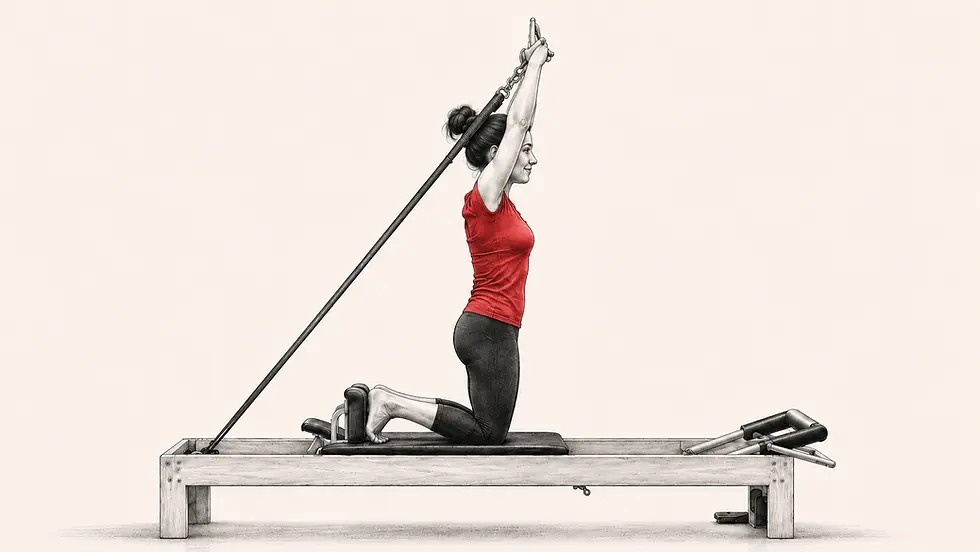
Guidelines from obstetric bodies advise against staying flat on your back for long periods later in pregnancy. For that reason, I replace lying flat with side-lying, sitting, kneeling and standing work. The Reformer is adaptable here: we use the springs and the footbar in positions that feel comfortable and stable, and we change them as the weeks go by. If any position makes you dizzy, short of breath or uncomfortable, we change it at once.
What the evidence suggests
One study found that supervised group exercise was linked to lower back and pelvic pain intensity in pregnancy, and a broader expert review reports associations between regular physical activity and lower risks of gestational diabetes and pre-eclampsia. The research does not show that exercise prevents back pain for everyone, and I would not say so. What it does support is that staying active in an uncomplicated pregnancy is generally safe and beneficial.
What we focus on
The back and hips. Gentle strengthening and mobility for the muscles that are working overtime.
The chest and ribs. Breathing into the sides and back of the ribs, to make the most of the space you have.
The legs. Strength for stairs, for getting up from the floor and for carrying a toddler if you have one.
The pelvic floor. Awareness of how it feels to contract and to release, which is useful for the birth and for the weeks that follow.
Sitting and standing: Wunda Chair, Arm Chair and Pedi-pole

When lying down gets uncomfortable, and I keep time on the back short after about 26 weeks, much of the session moves to upright positions. Pilates has no jumping or impact, and the springs give a smooth, adjustable resistance, so you can still work hard without strain.
Wunda Chair. Sitting on the chair, you press the pedal with your feet against the spring. Your back stays upright, there is no pressure on the abdomen, and your legs and glutes do real work.
Arm Chair. With your back against the backrest, you work arms and shoulders against springs. The backrest helps you keep the spine long, which gets harder as your posture changes.
Pedi-pole. Standing with your feet on the platform and your hands in the springs, you work arms, shoulders and posture without lying down at all.
Lying on your side on the Cadillac also remains an option, because the top leg can work against a spring while you stay comfortable. All of these are described in Pilates in pregnancy: Cadillac, Wunda Chair, Arm Chair and more.
Breathing for birth
Many mothers tell me that practising slow, controlled breathing helped them feel calm. I treat it as a skill to practise, not a guarantee. I will not tell you how to give birth; your midwife and your birth team do that. What I can offer is the practice of breathing out with control and relaxing the jaw, shoulders and pelvic floor, which is useful in many situations.
Signs to stop and call your doctor
Bleeding, regular painful contractions, leaking fluid, a sudden headache, visual changes, chest pain, severe shortness of breath, calf pain or swelling, or a marked reduction in your baby's movements all need medical attention, not a Pilates session.
Looking ahead
After the birth, the next step is a return to exercise that respects your recovery; I describe it in postnatal Pilates: when and how to restart. If you are earlier in your pregnancy, you may prefer Pilates in the first trimester, and the overview in Reformer Pilates during pregnancy covers the whole nine months.
What a late-pregnancy session looks like

We start by checking how you are that day: how the baby has been moving, whether you have had any discomfort, how you slept. Then we choose positions that suit you, usually side-lying, sitting on the carriage or kneeling, and avoid long periods on your back. We might spend part of the hour on gentle leg and back work, part on breathing into the ribs, and part simply on moving the hips and pelvis in a comfortable range. If you are tired, we stop early and finish with relaxation. I follow your midwife's or doctor's advice at every stage.
Practical tips for the last weeks
Get out of bed by rolling onto your side and pushing up with your arms, rather than sitting straight up.
Sleep on your side with a pillow between your knees, which many women find eases the hips.
Wear shoes that grip and support the foot, since your balance is not what it was.
Keep water close and avoid overheating, in the studio and outside, especially in a Marbella summer.
Carry shopping in two lighter bags rather than one heavy one.
None of these is a rule. They are habits that many women find make the last weeks more comfortable.
Frequently asked questions
Until when can I train?
As long as your doctor or midwife agrees and you feel comfortable. Some women continue until the last weeks with smaller sessions, and others stop earlier. Both are fine.
Can I do Pilates with pelvic girdle pain?
Often with adaptations, but tell your midwife or a physiotherapist about the pain, because it may need specific management. I avoid anything that makes the pelvis hurt, such as wide leg movements or standing on one leg when that provokes it.
What about the pelvic floor?
We work on awareness of contracting and letting go. If you notice leaking or a sense of heaviness, speak to a pelvic health physiotherapist, and read the pelvic floor and Pilates: what helps and what does not.
Sources
To ask about sessions in the last months of pregnancy, write to me on WhatsApp.
Francisco Benítez teaches private classical Pilates at his studio in Guadalmina Alta, Marbella. He has worked in Pilates since 2002, in Germany first and in Spain since 2005.


Comments