Pilates After a C-Section: Rebuilding Core Control

A caesarean birth is also abdominal surgery, and the recovery deserves to be treated that way. You are looking after a newborn while your body repairs several layers of tissue, which is exactly why the "bounce back" messages on social media do more harm than good. If you live near San Pedro de Alcántara or Guadalmina and want to return to movement with confidence, here is how I approach it having worked since 2002 with people who are recovering from surgery and injury.

What is actually healing
The incision passes through the skin, the fat, the connective tissue of the abdominal wall and the uterus. The scar you can see is the smallest part of it. Inside, the tissue keeps remodelling for months, which is why feeling fine at eight weeks does not mean everything is ready for hard abdominal work.
It is also common to feel numbness, tingling or a tight pulling around the scar for a long time. That does not mean something is wrong, but it does mean the area needs to be moved gently and patiently, not avoided and not forced.
Timing: the medical approval comes first
Most health services review you around six to eight weeks, and I ask for your doctor's or midwife's approval before our first session. Some physiotherapy sources describe a staged return: rest in the first couple of weeks, gentle breathing and mobility from about two to six weeks with professional guidance, and low-impact Pilates from roughly the second or third month once cleared. Others advise a longer wait, and higher-intensity exercise such as running usually comes later still.
A pelvic health physiotherapist can assess the scar, the abdominal wall and the pelvic floor, and I am happy to work alongside them. The timeline is yours, not a calendar's.
What we do first
Breathing into the sides and back of the ribs, which brings movement back to the diaphragm without straining the scar.
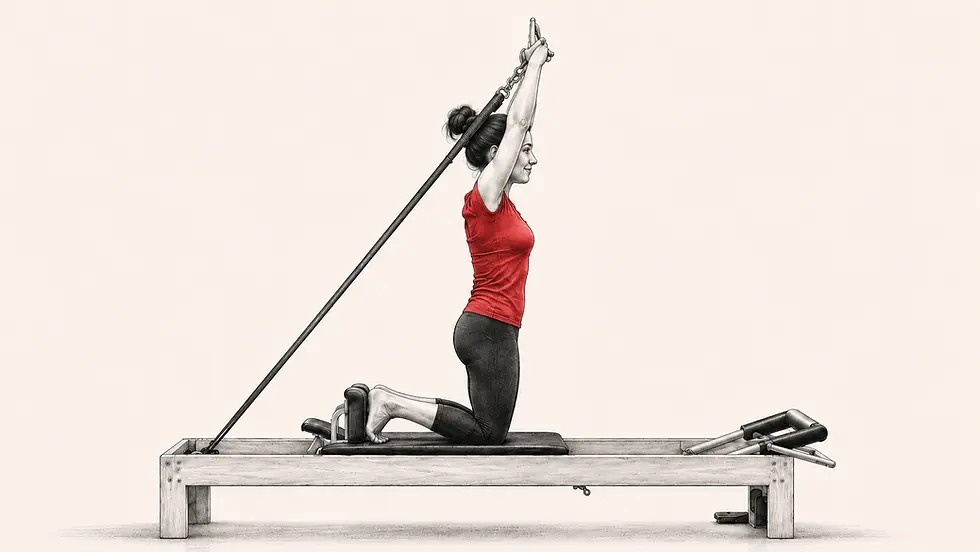
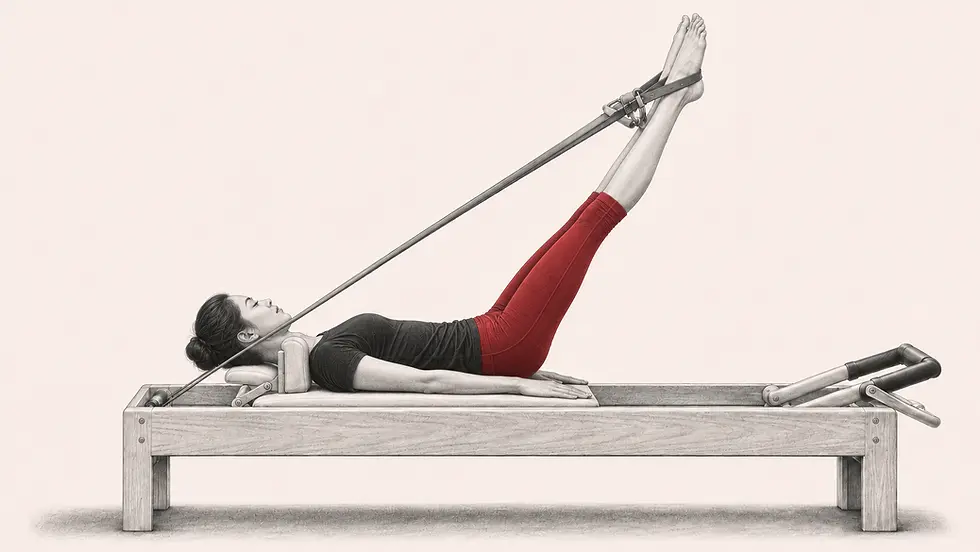
Gentle pelvic and spinal movements lying down, supported by the springs of the Reformer.
Posture work for feeding and lifting, especially for the upper back and shoulders.
The everyday movements: getting out of bed, picking up the baby, carrying the car seat.
Small habits that protect the scar between sessions
Roll onto your side and push up with your arms when getting out of bed, instead of sitting straight up.
Hold a small pillow over the scar when you cough, sneeze or laugh.
Keep the baby close to your body when lifting, and exhale as you lift.
Avoid carrying heavy loads on one side, such as a car seat hooked over one arm, for as long as your doctor advises.
Why many mothers hunch
After a caesarean it is natural to protect the scar by curling forward, and the habit can stay long after the scar has healed. A rounded upper back, a tilted pelvis and shallow breathing then become the normal way of standing, and they bring back ache and neck tension. Part of my work is to notice that pattern and help the body find its length again, without any hurry.
What we leave for later
Anything that pulls hard across the scar or makes the abdomen dome upward: sit-ups, crunches, planks, quick twisting and heavy lifting. Many classical exercises begin with the spine curled forward, so I postpone those and choose alternatives until the deep abdominal muscles can manage pressure well. Nothing is forbidden for ever. It is a question of order.
About scar tissue
Once the wound has fully healed and you have been cleared, many physiotherapists teach gentle scar massage. That is their territory, not mine. What I can do is notice how you move around the scar: whether you hold your breath, tilt the pelvis forward or avoid bending to one side, and help the body use the whole trunk again.
When to pause and call your doctor
Redness, discharge, fever or increasing pain around the scar: contact your doctor straight away.
A pulling sensation at the scar that does not settle after a session.
Heaviness or pressure in the pelvis, or leaking.
A ridge or dome along the midline of the abdomen.
Where to go from here
Once a week suits most mothers in this stage; I explain how I think about rhythm in how often to do private Pilates. My article on Reformer Pilates for post-operative recovery describes the wider principles I use after any surgery, and the one on the powerhouse describes the deep core we are rebuilding. If you are close to San Pedro, you might also read about classical Pilates in San Pedro de Alcántara or visit the San Pedro Pilates page.
Frequently asked questions
When can I start Pilates after a caesarean?
Only after your doctor or midwife has cleared you, usually at the six to eight week check at the earliest. I ask for their agreement before the first session.
Is it normal to feel tight around the scar?
Tightness or pulling is common for a long time. If it is painful, red or leaking, contact your doctor.
Sources and further reading
To talk about your own recovery, write to me on WhatsApp and we will plan it together with your doctor's advice.
About Francisco. Pilates has been Francisco Benítez's profession since 2002. At Authentic Pilates Studio in Guadalmina Alta, Marbella, he gives private sessions of about an hour on the Reformer and the other classical apparatus.

Comments