Diastasis Recti: Exercises to Avoid and to Choose


If you have diastasis recti, you have probably already read three different lists of exercises to avoid, and they do not agree with one another. That is because the evidence is still limited and the right choice depends on your body, your strength and your stage of recovery. What I can give you is a guide to what most professionals agree on, and the logic behind it, so that you can recognise a good exercise from a risky one.
The logic
The abdominal wall has to manage pressure. When an exercise pushes the pressure forward and makes the middle of the abdomen rise into a ridge or a dome, it is asking the stretched connective tissue to do more than it can control at that moment. That is the pattern to avoid for now. Movements that keep the abdomen flat and the breath steady are the ones that build control.
What most sources advise leaving out at first
Sit-ups and crunches.
Full planks and full push-ups.
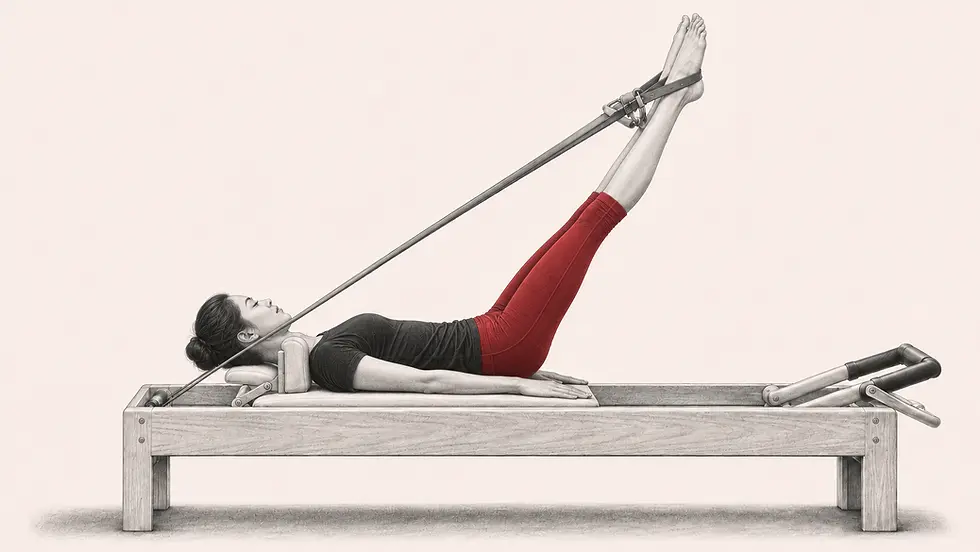
Lifting both legs at once while lying on your back.
Heavy lifting, especially while holding the breath.
Deep back extensions that make the belly dome forward.
Some teachers allow modified versions of planks or crunches earlier than others, once the abdomen stays flat under load. This is why an assessment matters more than a rule.
What most sources advise choosing
Breathing into the sides and back of the ribs.
Pelvic tilts and gentle movement of the spine while lying down.
Bridging and leg work on the Reformer with the springs supporting you.
Side-lying work for the hips and waist.
Arm exercises in which the abdomen holds still, such as the arm springs on the Cadillac.
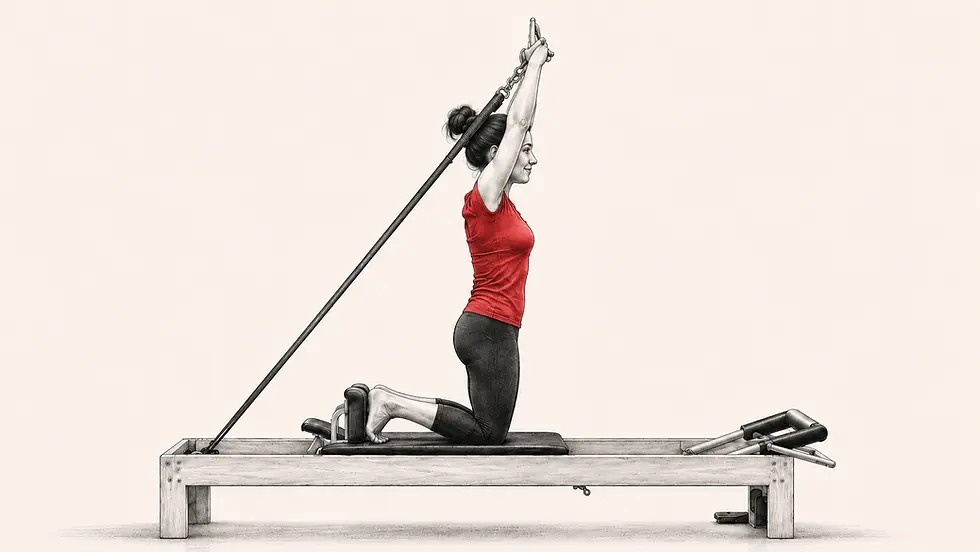
Standing and kneeling work for posture and balance.
Everyday movements count more than exercises
An hour of careful exercise can be undone by habits you repeat fifty times a day. Roll onto your side before getting out of bed instead of sitting straight up. Exhale as you lift a child, a bag or a suitcase. Avoid bracing and pushing the belly out when you strain. Support the abdomen with your hands when you cough or sneeze if you notice doming. These small adjustments protect the tissue between sessions.
A simple check for doming
Lie on your back with your knees bent, and lift your head slightly while looking at your abdomen or placing two fingers along the midline above and below the navel. If a ridge or a dome rises along the middle, that movement is too much for now. If the surface stays flat and soft, it is manageable. It is only a rough guide, and a physiotherapist can assess it more accurately.
How I adapt the classical order
The classical repertoire includes many exercises that begin from a curled spine. I do not discard them; I delay them. In the first sessions we work on the elements those exercises depend on: breathing, rib control, pelvic stability and the deep abdominals. Later, when your abdomen stays flat under the load, we bring them back in a modified form, and eventually in the full form if your body allows it.
Warning signs during a session
Stop and tell me if the middle of your abdomen rises into a ridge, if you feel pulling or pain, or if you notice pressure in the pelvis or leaking. These are signals to try something easier, not to push through.
Where to read more
I describe my wider approach in how classical Pilates approaches diastasis recti, and the article on how breathing improves control and posture explains the first step. Each private session lasts 60 minutes, and once a week is a very good rhythm to begin; see how often to do private Pilates.
A note on support bands
Some physiotherapists suggest a support band or belt for a limited period after pregnancy, or for specific activities. Others prefer not to use one, because they want the muscles to take over the work. The advice varies, and it is a choice to make with the professional who has examined you. If you do use one, the exercises above still apply.
How to progress
You are ready for more when the abdomen stays flat during an exercise, you can breathe steadily through it and there is no pulling or pressure afterwards. Then we make one change at a time: more range, a heavier spring, a longer hold. If the dome returns, we go back one step. It is not a failure to do that. It is how the tissue learns.
Frequently asked questions
Can I ever do planks again?
Many people can, once the abdomen stays flat under load and they have been cleared by a professional. We build towards it through easier positions first.
Is walking safe with diastasis?
Yes, walking is generally encouraged. If you notice doming, pulling or pelvic pressure when you walk with a stroller or carry a child, mention it to your physiotherapist.
Are group classes safe?
It depends on the class. Many include sit-ups, planks and fast twisting, which may not suit you early on. A private session lets me change every exercise, which is why many people choose one at this stage.
Sources and further reading
If you live in Benahavís or the hills behind Marbella, the studio in Guadalmina Alta is a comfortable drive away. To book or ask a question, message me on WhatsApp.
Written by Francisco Benítez, who trained in Pilates in 2002 and worked in a studio in Germany before opening Authentic Pilates Studio in Marbella in 2005. He teaches one-to-one classical Pilates in Guadalmina Alta.

Comments