Posture After 50: Why 'Stand Up Straight' Does Not Work

"Stand up straight" is probably the most repeated piece of posture advice, and it is also one of the least useful. People pull their shoulders back, lift the chest and lock the lower back, and within a minute they are tired and have gone back to their usual position. After fifty the problem is rarely willpower. It is what the body has become used to.
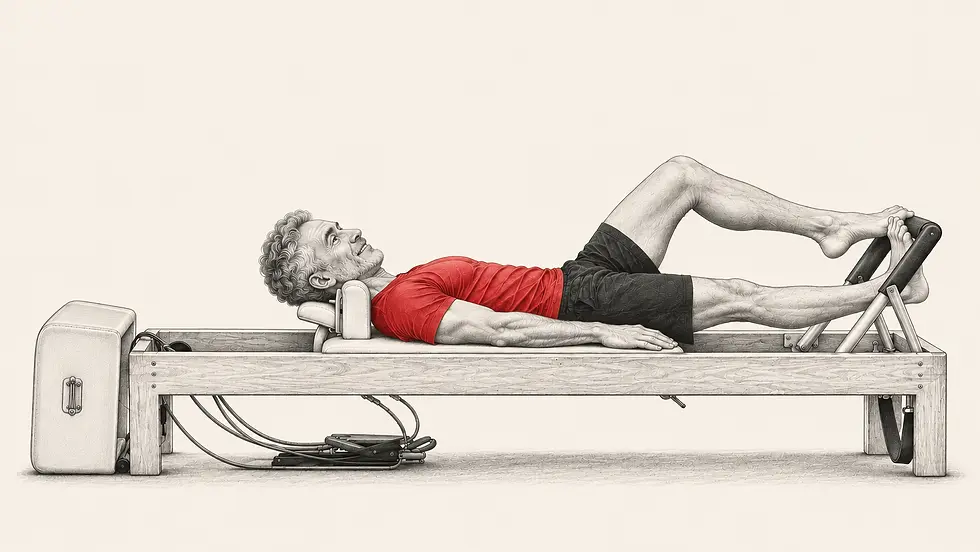
What changes after fifty
Several things happen together. Muscle mass declines gradually unless it is trained. The discs between the vertebrae lose some height. Years of sitting shorten the muscles at the front of the hips and chest, and the muscles of the upper back weaken. Bone density may fall, particularly after menopause, which is one reason a rounded upper back is taken seriously. Many people also lose some balance and confidence, and a stooped posture can follow.
None of this is inevitable or sudden, and it can be influenced by training.
Why forcing it fails
When you pull the shoulders back by effort, you use muscles that are not strong enough to hold the position, and you often compensate by arching the lower back. The result is tension in the neck and the lumbar spine, and no lasting change. Posture is not a position to hold. It is the result of strength, mobility and awareness working together, so you can move and rest without effort.
How I approach it
Breathing first. When the ribs move well in three dimensions, the upper back opens more naturally.
Strength where it counts. The back extensors, the glutes and the muscles between the shoulder blades, trained against light spring resistance.
Mobility of the hips and the upper spine, so you are not fighting stiff areas.
Balance and walking, because posture is tested while moving.
Awareness, learning how the pelvis, ribs and head stack when you stand and sit.
I use the Reformer and the other classical apparatus for this, with the details of each session depending on you. For the wider picture of modern habits, see Reformer Pilates for better posture, and if you are also concerned about bone health, read Pilates for osteoporosis.
What the first session looks like
I start by asking what bothers you: tiredness when standing, a rounded upper back, pain, or a fear of falling. I look at how you stand, sit and walk, and at how your ribs and shoulders move. From there we choose a few movements to practise, usually lying down first, so you can feel the difference between holding yourself up and being organised. You leave with one or two simple things to repeat at home, and we build from there. If you have osteoporosis, a fracture or surgery, I want to know first and I follow your doctor's advice.
Everyday habits
Alternate sitting and standing, and walk for a few minutes every hour.
Look at screens at eye level.
Sleep in a position that does not push the head far forward.
Practise getting up from a chair without using the hands.
Carry loads close to the body, and spread them between both sides.
When to ask for advice
A noticeable loss of height, a new rounding of the upper back, or sudden back pain after a minor fall are reasons to see a doctor, who may check bone density.
A three-minute standing check
This is a way to notice how you stand, not a position to hold. Stand with your heels a few centimetres from a wall and let the hips, the upper back and the head rest lightly towards it, without forcing. Notice which parts touch easily and which do not. If the head is far from the wall, or there is a large gap behind the lower back, you have learned something about your habits. Then step away and walk around, because the point of the exercise is awareness, not holding yourself against a wall.
Why small and regular beats big and rare
Posture changes through repetition. A few minutes of attention each day, combined with a weekly session where I can see you move, usually does more than one long effort. The body learns by being reminded gently and often, and by finding that the new way feels easier than the old.
Posture while walking
Posture is tested when you move. Notice whether you swing both arms, whether your steps are even and whether your head stays level. Walking tall without forcing it is a good practice, and it is worth doing for a few minutes on a quiet stretch of the promenade or a path.
Frequently asked questions
Can posture really improve after fifty?
In my experience it can improve in how you stand and how it feels, because strength and mobility respond to training at any age. I would not promise to reverse a long-standing curve.
Do I need to buy a posture corrector?
Braces that pull the shoulders back can feel helpful for a moment, but they do not build the strength that holds you up. I would put the effort into training.
How often should I come?
For most people one 60-minute session a week is enough to learn and practise. A second one helps if you want to progress faster.
Related reading
My piece on Reformer Pilates for older adults describes how I structure sessions after sixty. If you are in Estepona or nearby, see the Pilates in Estepona page.
To ask about private sessions, message me on WhatsApp.
About Francisco. Pilates has been Francisco Benítez's profession since 2002. At Authentic Pilates Studio in Guadalmina Alta, Marbella, he gives private sessions of about an hour on the Reformer and the other classical apparatus.


Comments